
Michel Maietta explained that ignoring minorities slows
down development and can trigger factors antagonistic
to development. He juxtaposed the point with a situation
where motorists on a busy Kampala street ignore a car
that has broken down, and the problem ends up wasting
everyone’s time.
The panels focused the discussion on women, and
what states lose by excluding them.
Maggie Kigozi argued that since they are the majority,
women can contribute a lot but only if the culture of
patriarchy is erased. “Women do better business
because they mind about their workforce. Profits from
women’s businesses help improve the family’s welfare,
because they care about family first, not bars.”
Maietta concurred, noting that women are powerful
and creative, and that obstacles to their development
basing on cultural ideologies since time immemorial, has
kept many of them from rising. “Development requires
that we go beyond gender and groups. Talents are
everywhere, even the farthest from you needs space for
development,” he said.
Maxime Houinato said many women farmers remain
poor because they do not control the land they use since
their husbands can decide to sell the land anytime.
He said women are more responsible and can benefit
society more if allowed to independently engage in
economic activities.
The panellists highlighted the high cost of excluding
minorities and emphasised the need to include
their voices before any development decision is
taken.
Maxime shared that countries that rank high on gender
equality are economically strong. “Gender discrimination
costs the world USD 12 trillion and 16 per cent of global
income is lost annually. In India, balancing distribution of
fertilisers equally between women and men increases
production by 30 per cent. So gender equality is free
money that Uganda is not tapping.”
Nalule Safia Jjuuko said it is important to give minorities
a political voice because they have inherent human
rights and needs, irrespective of their physical abilities
or numbers. “There is need for wide consultation of
every minority group before policies are made and
implemented.”
- Time: 11:00 am
Meet the Panelists

Michel Maietta
Director of Research, IRIS, France

Dr. Maggie Kigozi
Director, Zuri Model Farm Ltd
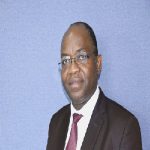
Maxime Houinato
Director, UN Women Uganda
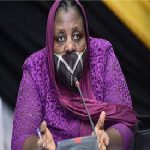
Nalule Safia Jjuuko
National female PWD Member of Parliament, Uganda

Ramathan Ggoobi
lecturer, Makerere University Business School (MUBS)